
If I was in charge of picking what my headstone said, and my choices to describe myself was limited to just one word, I’d look no farther than ‘Flaky’ because that’s as accurate as it can get. I don’t mean some of the nasty definitions google throws up for this, like dishonest or deceitful, but just plain indecisive and unreliable.
This inability to stick to something once I’ve made up my mind followed me through college, when I dropped out halfway through studying robotics engineering, started a graphics design course which I promptly gave up on, before going back to finish the former degree. I slowly transitioned from being unable to be decisive on major life decisions to simply adopting a nihilistic approach whilst at a crossroads – ‘Just wing it’ or ‘Whatever goes’ became my mantra.
What does this have to do with leadership? Well, like every other Indian engineering graduate, my first job was in a completely unrelated domain (in this instance, content writing) under a traditional boss who employed an autocratic style of leadership. Borrowed from psychologist Kurt Lewin’s 1939 findings, this refers particularly to an authoritarian style where the boss gives instructions and expects diligent obedience. (Leong, 2017).
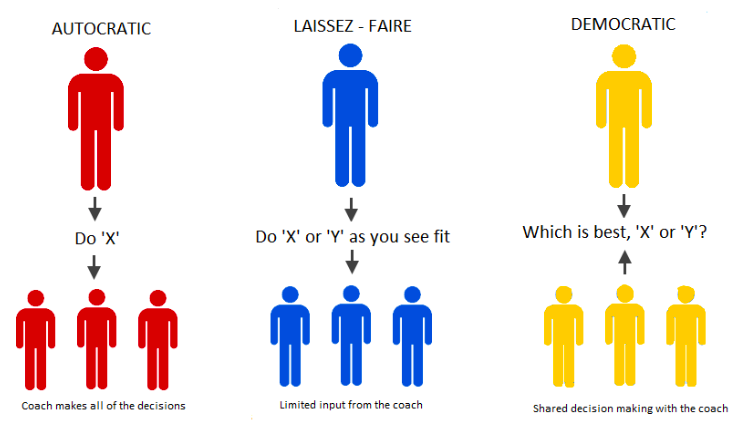
Some highlights of my brief stay at this job included being expected to respond to round-the-clock emails, ask limited questions about the projects, and simply follow instructions whether I agreed with them or not. This is precisely in line with Hofstede’s insights, who ascribed a massive Power Distance value to India, implying that superiors expect obedience and subordinates are happy to comply. (Hostede, 1984)
I don’t blame my boss, since he clearly believed this was the right way to get results, but I could not put up with it for more than a couple of months.
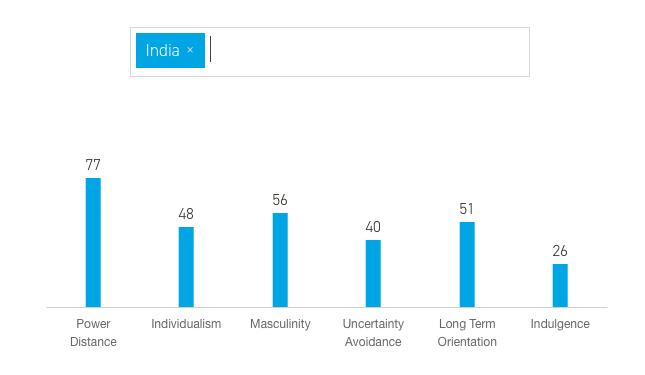
Infact, this is a situation prevalent all over Asia. A region of the world representing major economic powerhouses has one consistent trait across cultural barriers, be in China, India or Malaysia. ‘Excessive deference’, ‘refusing to compromise with subordinates’, ‘paternalistic and hierarchical’ were phrases that came up in an HBR report analysing Asian leadership styles (Sanger, 2016)
I learnt instantly that I was not cut out for this. In a bid to escape this system of linear power, I sought out modern start-ups over corporate institutions to work for. My next two jobs, spread out over four years, involved working under managers who demonstrated a more democratic style of leadership, handing out greater responsibility and empowering me to motivate myself for the day-to-day rigour of a job that inevitably gets gruelling. (Leong, 2017)
I didn’t realize this until my recent lectures, but what I had been witnessing was a dynamic shift from working under leaders using coercive/legitimate power to get things done to ones using expert power. (Murphy, 2017)

When I got to a stage where I was asked to mentor new recruits, I leant towards expert power, relying on my technical know-how to establish a position where I tell others where they’re going wrong and how they could fix it. What I did not expect was that I would subconsciously adopt a lassez-faire style in managing group projects, as opposed to the democratic style that I still think works best in an optimal situation. (Leong, 2017)
This spilled over into the mini-tasks during the first term of my MBA, where I instantly sat back and let each member do his/her own thing, before panicking and trying to fix too much in too short a time. When my team members informed me of these developments while gathering feedback for this blog, I realized that this is my ‘Johari window’ blind spot, an area I can work on, honing my mentality to adopt a more democratic style where I spell out guidelines before encouraging my team to unleash their individual talents. (Ingham, 1961)

My preferred area of work would be digital marketing, which anyway does not offer much scope to leverage legitimate or titular power to get things done. Most of the day-to-day aspects in this job are subjective and rely on collective brainstorming to give shape to an abstract idea, like picking the narrative of a blog or designing an effective marketing campaign, projects that involve and encourage collective opinions and consensus. (Murphy, 2017)
My career is still in its fledgling stage, so I fully expect to tussle between various styles of both subordination and leadership before finding my niche. However, in theory, I fully expect to evolve into a situational leader. This means employing a wide variety of styles to adapt to the situation, over picking one philosophy to embrace permanently. (Bajic, 2017)
All this, of course, is just scratching the surface when it comes to introspection laced with self-awareness, and I fully expect my ideas to undergo radical changes as I continue my journey towards balancing intrinsic talent with external acquired learning.
References
Bajic, E (2017). Figure out which leadership style works for you. Forbes [Online]. Available at: https://www.forbes.com/sites/elenabajic/2017/01/05/leadership-style-works-for-you/#47645ae4e144 [Accessed July 6, 2019]
Hofstede, G., & Bond, M. H. (1984). Hofstede’s culture dimensions: An independent validation using Rokeach’s value survey. Journal of cross-cultural psychology, 15(4), 417-433. [Accessed July 6, 2019]
Ingham, H. (1961). The Johari window. Human relations training news, 5(1), 6-7. [Accessed July 6, 2019]
Leong, C (2017). Why Asia’s leaders still have to become global leaders. Forbes [Online]. Available at: https://www.forbes.com/sites/cheetung/2017/06/20/why-asias-leaders-still-have-to-become-global-leaders/#4d1a61ed5652 . [Accessed July 6, 2019]
Murphy, M (2017). The seven types of power you need to succeed. Forbes [Online]. Available at: https://www.forbes.com/sites/markmurphy/2017/03/19/you-need-to-know-the-7-types-of-power-if-you-want-to-succeed/#3ab6f2d536d6 [Accessed July 6, 2019]
Sanger, M (2016). What leadership looks like in different cultures. HBR [Online]. Available at: https://hbr.org/2016/05/what-leadership-looks-like-in-different-cultures [Accessed July 6, 2019]


 Academia in Business
Yes, refusing to compromise with subordinates is a common Asian leadership style.
LikeLike
Yeah, definitely one aspect that needs to be scrutinised and changed. Have you had any similar experiences?
LikeLike
Well written Naren 👏. The bitter truth on Indian work culture.
Do you think Indian work culture will be changing anytime soon and What are the changes you expect to see?
LikeLike
I think the emergence of the start-up culture will kickstart a change..In places like Bangalore there’s already a radical shift, with corporates going as far as to mimic elements of the start-up culture. Hopefully the trend sticks
LikeLike
This article is a great example of how attitudes are shifting in the workplace towards a more laissez faire style in the workplace. I agree that the leadership journey is a constantly evolving process.
LikeLike
would you say a lassez-faire approach is more effective than a democratic middle-ground style? And I agree, definitely need to have quite a few tactics in the arsenal to fit each situation along the evolution process
LikeLike
This is an interesting experience for you. After this leading in a changing world course, do you think now you ready to be a leader in a organisation?
LikeLike
I think practical learning on-the-job will trump theoretical applications any day. but I definitely believe I’m better equipped than before. What about you?
LikeLike
Very impressive blog. Good explanation of the Johari window framework.
LikeLike
Thanks, do you think blind spots can be worked on or are they inherently hard to get rid of?
LikeLike
This is some honest introspection…nice work! All the best with the situational leadership 😀
LikeLike
Cheers, do you think adaptable and situational leadership styles are possible in the real world? It always happens that you need to use authoritative methods more often than not
LikeLike
Nice transition. Being a situational leader would entail combining all the 5 bases of power, wouldn’t it?
LikeLike
Yes, the toughest challenge imo is the willingness to use coercive power when it’s necessary to discipline rogue employees
LikeLike
Highly insightful and the personalized narative makes it even more comprehensible.
LikeLike