
There’s a lot of contemporary blogs that debate and discuss whether companies need constant changes in organizational (both internal and external) models, sparking change in leadership or an en-masse culture shift. But what if the very model being applied to drive this change is outdated and redundant?
Shift in mentality
There’s a growing school of thought that current managerial practices are stuck in the ‘industrial’ era rather than adapt to the ‘knowledge’ era we find ourselves in (Manville, 2003). Infact, Peter Drucker quipped as early as twenty years ago that ‘the things we assume about business and organizations are outdated by at least 50 years’ (Drucker, 1998, p162.)
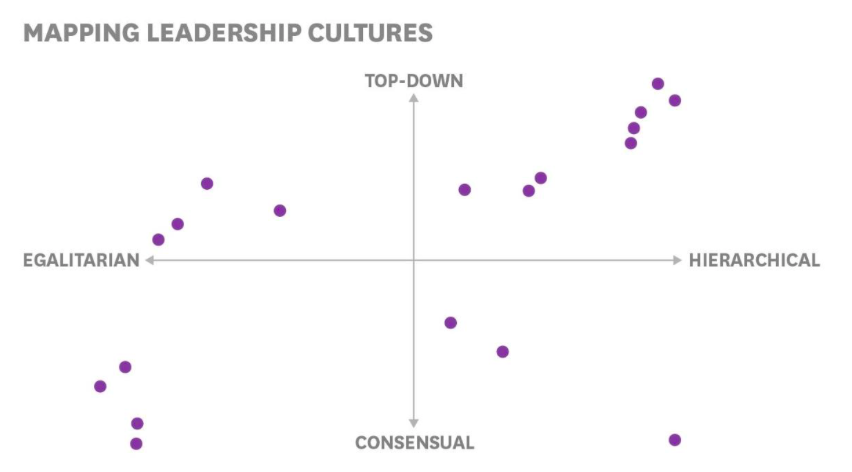
So, how do we strive to bring about an evolution in leadership styles? The first step is identifying and eradicating the redundant models before cultivating a sense of motivational authority, where people follow you because they want to, not because they must. This means transitioning from a hierarchal/bureaucratic to an egalitarian leadership model (Trapp, 2014)
Flawed Perceptions
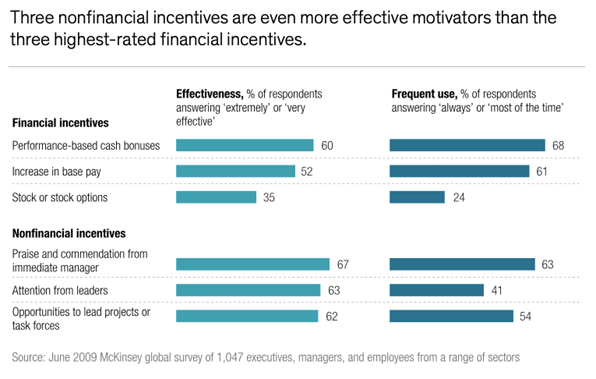
The first and, in my opinion most significant, is that managers still rank monetary incentive at the top of the list of techniques they would use to motivate their employees and coax more out of them. However, this is simply not true of the modern generation of employees, who crave more than financial compensation in order to be productive. Dewhurst, 2009)
In fact, one particularly interesting Mckinsey survey revealed that employees viewed praise from managers, being included in important conversations and being given a chance to lead significant projects as more important than financial benefits (Dewhurst, 2009)
For managers caught in this transition, it can be a tough choice to evolve from the traditional ‘carrot-stick’ method of offering rewards and punishments alternatively, to a more sophisticated way of management. The latter involves increased use of judgement calls over following the rulebook, placing greater demand on managers to think smartly and decisively.
Inside the Mind of the Uber Think-Tank
Uber has traditionally built on masculine, individualistic traits like ‘Hustle’ and ‘Confrontation’, designed to encourage competition among employees that ultimately benefits the organization. This is the very definition of an anti-collective, short term mentality that needs to evolve into more feminine traits like inclusion and teamwork (Carson, 2017)
Infact, Uber’s HR chief touched upon this in a mail to employees, stating that the company’s future strategic direction would encompass traits like ‘joy at work’ and ‘employee satisfaction’. The core values and practices that are undergoing an emphatic overhaul under new leadership are diversity in opportunities (both gender and ethnic), streamlined performance review systems and greater accountability for senior executives. (Carson, 2017)
Cross-Culture Barriers and Precedents from the Hofstede Model
It’s imperative that such changes place an emphasis on gradually evolving from traditional, run-of-the-mill masculine practices like idolization, individualism and quick-fix efficiency to feminine tendencies like collectivity, communication, collaboration and inclusivity (Hwang, 2014)
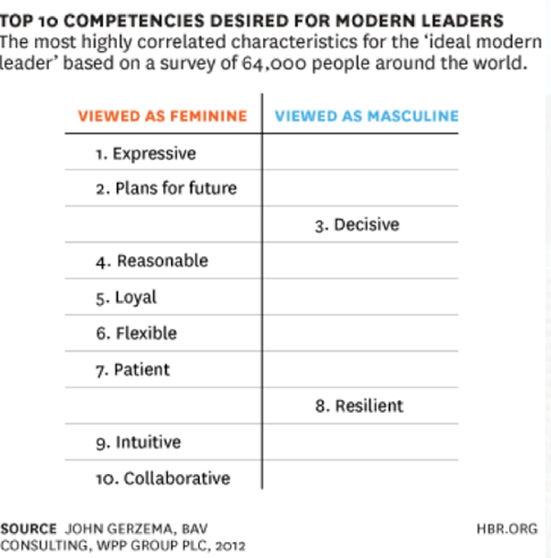
It’s worth noting here that the feminine tendencies tend to focus more on long term progress and evolution than their masculine counterparts, irrespective of the actual gender of the leader exercising these traits. Infact, this is the main aspect of Hofstede’s cultural dimensions that need re-imagining in order to effect cultural shifts across global barriers.
Companies based in societies that display greater masculinity and greater power distance (Africa, Middle East) have the added challenge of changing these deep-rooted, long-standing ideologies. They will have to go the extra mile in order to effect a dramatic change in the way employees react to cultural changes (Trapp, 2014)
It’s not just outdated models that contribute to deep rooted problems, but also the difficulties faced by leaders in translating innovative ideas across cultures. A small positive is that companies are finally acknowledging the elephant in the room Infact, a global survey that saw participation from 64,000 across 13 countries revealed that two-thirds of them think assimilation of more feminine traits is crucial to solving problems in business, government and society in general (Hwang, 2014)
Holistic fix
If the ultimate aim is to create a truly flexible, democratic workplace model, we need look no farther than successful ancient societies for inspiration. The ancient Greeks, for instances, ascended to the top of the societal pyramid by handing complete authority to each citizen, empowering them with a sense of individual initiative that lead to the ultimate betterment of society, in a very ‘team greater than the sum of its parts’ scenario. (Manville, 2003)
This is the type of motivation and effect leaders should try to achieve within an organization, focussing on creating a synergy that optimizes the balance between individual self-incentivization techniques and overall company objectives and growth. This will create a truly dynamic workplace environment that relies on intrinsic human values like trust and belief (over authority) to keep the cogs in the machine turning smoothly.
References
Carson, B (2017). 9 Changes Uber is Making. Business Insider [Online]. Available at: https://www.businessinsider.com/changes-uber-is-making-to-its-company-2017-6?r=US&IR=T [Accessed July 5, 2019]
Dewhurst, M (2009). Motivating People beyond money. McKinsey [Online]. Available at: https://www.mckinsey.com/business-functions/organization/our-insights/motivating-people-getting-beyond-money [Accessed July 5, 2019]
Drucker, P (1988). Management and the world’s work. HBR [Online]. Available at: https://hbr.org/1988/09/management-and-the-worlds-work [Accessed July 5, 2019]
Gerzema, J (2013). Feminine values can give leaders an edge. HBR [Online]. Available at: https://hbr.org/2013/08/research-male-leaders-should-think-more-like-women [Accessed July 6, 2019]
Hwang, V (2014). Are Feminine Traits the future of leadership? Forbes [Online]. Available at: https://www.forbes.com/sites/victorhwang/2014/08/30/are-feminine-leadership-traits-the-future-of-business/#495a4879598e [Accessed July 5, 2019]
Manville, B (2003). Beyond Empowerment: Building a Company of Citizens. HBR [Online]. Available at: https://hbr.org/2003/01/beyond-empowerment-building-a-company-of-citizens [Accessed July 5, 2019]
Meyer, E (2017). Being the boss in Brussels, Boston and Beijing. HBR [Online]. Available at: https://hbr.org/2017/07/being-the-boss-in-brussels-boston-and-beijing [Accessed July 6, 2019]
Trapp, R (2014). Why Successful Leaders acknowledge Cultural Differences. Forbes [Online]. Available at: https://www.forbes.com/sites/rogertrapp/2014/06/30/why-successful-leaders-acknowledge-cultural-differences/#1f28b410661f [Accessed July 5, 2019]


 Academia in Business
Well thought out and explained. Most jobs pay well these days but a healthy and peaceful work environment plays a vital in productivity.
LikeLiked by 1 person
Exactly, the real challenge is acknowledging the need for a change more than actual implementation
LikeLike
Great post 🙂
LikeLike
I really like this post. The traditional leadership models are certainly not helping people evolve spiritually. Being pinned against each other, running a rat race where everyone is out for themselves cannot lead to long-term fulfillment. On paper progress is made but our mental health is getting worse and worse the more we are manipulated with material possessions and scare tactics. Feminine traits in business are a must for the sake of the wellbeing of the work force and ultimately for the greater good of society as a whole.
Successful leadership to me is not one that generates the most profit in the short term but one that makes everyone who is under it to feel valued and motivated to bring their happy best self to work every. A sense of community is vital.
LikeLike
Totally agree, but I guess there’s a fear factor in dabbling in the unpredictable which could explain the hesitation among organisations to implement progressive cultural changes
LikeLike
I think Uber will have a lot to do in order to change… from what was meant to be a positive impact to society, creating a sharing economy, it’s turned to just any other company, trying to gain profit wherever possible.
LikeLike
Exactly. Shows the need to constantly monitor internal trends more than the external ones, even for a market pioneer such as Uber
LikeLike
Interesting. Although wouldn’t combining the two approaches, as in, finding the right time and place for both the male and female in one environment work better? Quick-fix, competitiveness aren’t necessarily wrong and can work well for small milestones in a long term plan. Though infrequently and without the mentality that was prevalent when these practices were developed.
LikeLike
Precisely, however since masculine tendencies are widely prevalent, an excessive dose of its feminine counterparts are needed. Eventually, a perfect blend will be the optimal solution
LikeLike
Sudden influx of the feminine approach and style in a company or environment that has dealt with things in masculine approaches and are used to it will only result in alienating the employees. Rather a transition and effecting a change in mentality is called for instead of the heavy dosing.
LikeLike
Swell point, I think the ‘change’ process here would call for trial and error methods. Some short-term losses would have to be tolerated for greater gains
LikeLike